The Bag Is Packed, but the Worry Isn't
It's the night before you leave to see family. The suitcase is by the door, and you're lying awake wondering how you'll nurse on a crowded plane, where you'll pump on the drive, and what your aunt will say when the baby wants to eat again an hour later.
Here's the short answer: holiday travel with a breastfeeding baby is very doable, and nursing is often the easiest part of the trip. Breast milk needs no prep and doubles as comfort when everything is new and loud. What takes planning is the stuff around it: timing feeds, protecting your supply, and finding quiet in a busy house.
At Latched Beginnings in Austin, families ask us these questions every holiday season. Here's what we'd tell a friend before she goes.
Can I Nurse on the Plane During Takeoff and Landing?
Yes. Many families find that nursing, or offering a bottle or pacifier, during ascent and descent helps babies swallow, which can ease ear pressure. Descent is often harder, so if your baby is asleep at takeoff, don't wake them. Try to save a hungry moment for the descent, which usually starts 20 to 30 minutes before landing.
A window seat gives you a wall to lean on and a little privacy, and a rolled jacket under your arm saves your shoulders. If your baby has their own seat with an FAA-approved car seat, which the AAP encourages when possible, nurse on your lap and return them to the seat afterward.
Bring milk and your pump through security without stress
In the United States, breast milk and pumping equipment are treated differently from regular liquids at security, and you can generally carry more than the usual small-bottle limit, plus ice packs. Tell the officer at the start of screening and keep milk in a separate bag. Rules can change, so check current TSA guidance before you fly.
How Do I Handle Feeds and Pumping on a Long Road Trip?
Babies ride buckled in whenever the car is moving, so feeds happen at stops. Many families plan a break every 2 to 3 hours, which matches how often young babies eat and gets them out of the car seat for a while, something safety experts recommend on long drives, especially with newborns.
Nurse at stops, not on the shoulder of the highway
A parked car with a sunshade on the window is a perfectly good nursing room. Build in 30 to 40 minutes per stop so no one feels rushed.
Pumping while you ride
As a passenger, a battery-powered, wearable, or manual pump lets you relieve fullness between stops. Never pump while driving. Pack a car adapter and spare parts.
Keeping milk cold on the way
The CDC says freshly expressed milk can stay in an insulated cooler with frozen ice packs for up to 24 hours. Then refrigerate or freeze it, and keep the cooler in the cabin, not the trunk.
Keeping Feeds on Track in a House Full of Relatives
Many babies who nurse easily at home pop off every few seconds in a busy house. That's normal. A quiet, dim bedroom helps most babies settle, and it's completely fine to excuse yourself for every feed.
Feeds also drift when your baby is passed from lap to lap. Watch for early hunger cues like rooting and hands to mouth, and if your baby sleeps through feeds in the excitement, offer the breast when they stir.
When family offers feeding advice you didn't ask for
Most comments come from love and from how things were done a generation ago. A ready-made line keeps the peace: "Breast milk digests quickly, and our pediatrician is happy with her growth." If someone suggests water or cereal in a bottle, thank them and follow your baby's care team. A partner who says "we've got a plan, thanks" helps too.
Protecting Your Milk Supply When the Schedule Slips
Travel days mean longer gaps, less water, and less sleep. If a feed gets skipped, hand express or pump for comfort so you don't stay overly full for hours, which can lead to clogged ducts and, over several days, lower supply.
Keep water nearby, eat real meals, and nap while someone else holds the baby. If you notice a hard, tender spot, read our guide to recurrent clogged ducts and mastitis. Call your OB or midwife promptly if you develop a fever, chills, or a red, painful area on the breast.
Call your baby's pediatrician right away for fewer than about six wet diapers a day after day 5, a fever, unusual sleepiness, breathing trouble, or several refused feeds. Look up urgent care near your destination before you need it.
Safe Sleep Away From Home
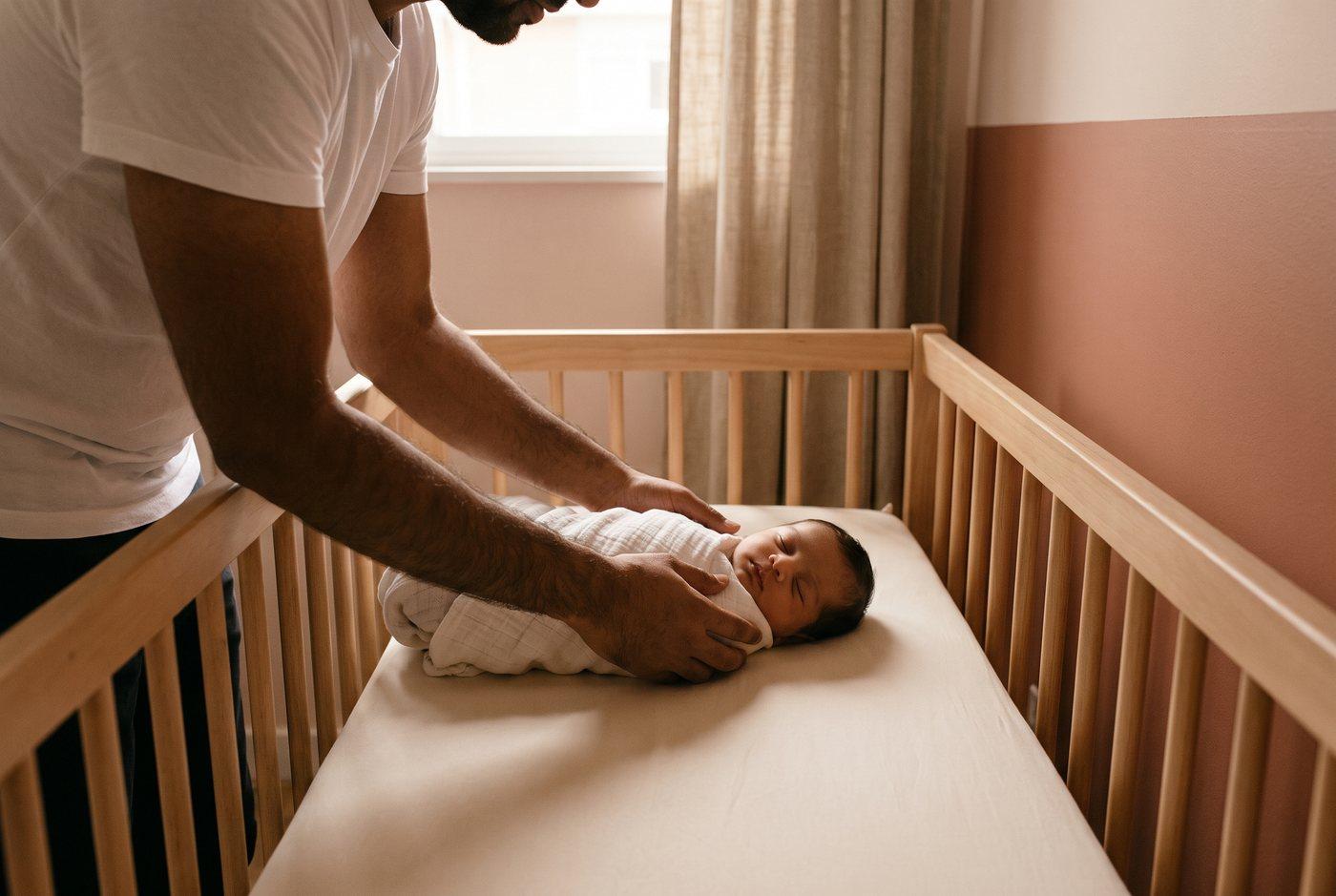
Safe sleep habits slip most when everyone is tired and the setup is unfamiliar. Bring a play yard, or confirm your host's is in good repair with its original firm, flat mattress and no soft bedding. Place your baby on their back, alone, for every sleep.
Avoid late-night feeds on a couch or recliner, one of the riskiest places to fall asleep with a baby. If you might doze, move to a bed you've cleared of pillows and blankets. Our post on safe sleep and night feeds walks through a calm plan you can bring with you.
Traveling Soon After a Tongue-Tie Release
If your baby had a recent tongue-tie release, follow the aftercare plan your provider gave you and bring it in writing. Plan the trip around your follow-up visits, since that's how your provider tracks healing and feeding, and ask before you book if you're unsure.
Save the office number in your phone. Our families have ongoing access to the team through our post-op care, so questions on the road don't have to wait until you're home.
How Latched Beginnings Helps Traveling Families in Austin
Sometimes a trip shines a light on something that's been building: feeds feel endless, nursing hurts, or your baby can't stay latched away from home. That's not a failure, and it doesn't automatically mean a tie. It's useful information.
Dr. Kacie Culotta, DMD, is the only dentist in Austin who holds both a laser certification for tongue-tie releases and a Certified Lactation Counselor certification. In a 1-on-1 feeding and oral tie consultation, she watches a full feed and checks how your baby's tongue actually functions, not just how it looks. Many families leave with a conservative plan, and when bodywork or an IBCLC is the right first step, we help you find those providers. When your baby thrives, you do too.
Frequently Asked Questions
Is it okay to breastfeed on a plane during takeoff and landing?
Yes, nursing during takeoff and landing is allowed, and many families find the swallowing eases ear pressure. Descent is often harder, so save a feed for the last 20 to 30 minutes if you can.
Can I bring breast milk through airport security without my baby?
Generally yes, breast milk is treated differently from other liquids in the United States whether or not your baby is with you. Declare it at screening, and check current TSA guidance before each trip.
How long does breast milk last in a cooler on a road trip?
The CDC says freshly expressed milk can stay in an insulated cooler with frozen ice packs for up to 24 hours. After that, refrigerate or freeze it, and label bags with the time you pumped.
What should I pack for holiday travel with a breastfeeding baby?
Pack your pump with spare parts and a car adapter, a cooler with ice packs, milk bags, and a nursing-friendly top. Add a portable crib if your host doesn't have one, plus your pediatrician's number.
Why does my baby keep pulling off the breast at Grandma's house?
Distraction is the most common reason, since a busy house is more interesting than nursing. A quiet, dim room usually helps within a day or two; pain, clicking, or poor weight gain is worth an evaluation.
Will holiday travel with a breastfeeding baby hurt my milk supply?
A few off-schedule days usually don't cause lasting harm if you nurse or pump when you feel full. Long gaps repeated over several days can lower supply, and feeding on cue helps it recover.
Can I travel after my baby's tongue-tie release?
Many families do, but plan the trip around your follow-up visits and bring your written aftercare plan. Ask your provider before booking, especially within the first two weeks.
Where can I get help with breastfeeding and tongue-tie concerns in Austin?
Latched Beginnings is at 1701 Simond Ave, Suite 107A, in the Mueller area of Austin, and we can be reached at (512) 814-7480. We see families from Austin, Round Rock, Cedar Park, Pflugerville, Leander, Georgetown, and surrounding areas.
Call to Action
Holiday travel with a breastfeeding baby can be warm and memorable, not just survivable. Trust your instincts. If feeding felt harder on the road than it should, or you'd like a clear plan before your next trip, schedule a 1-on-1 consultation with our team. We're here to guide you every step of the way.