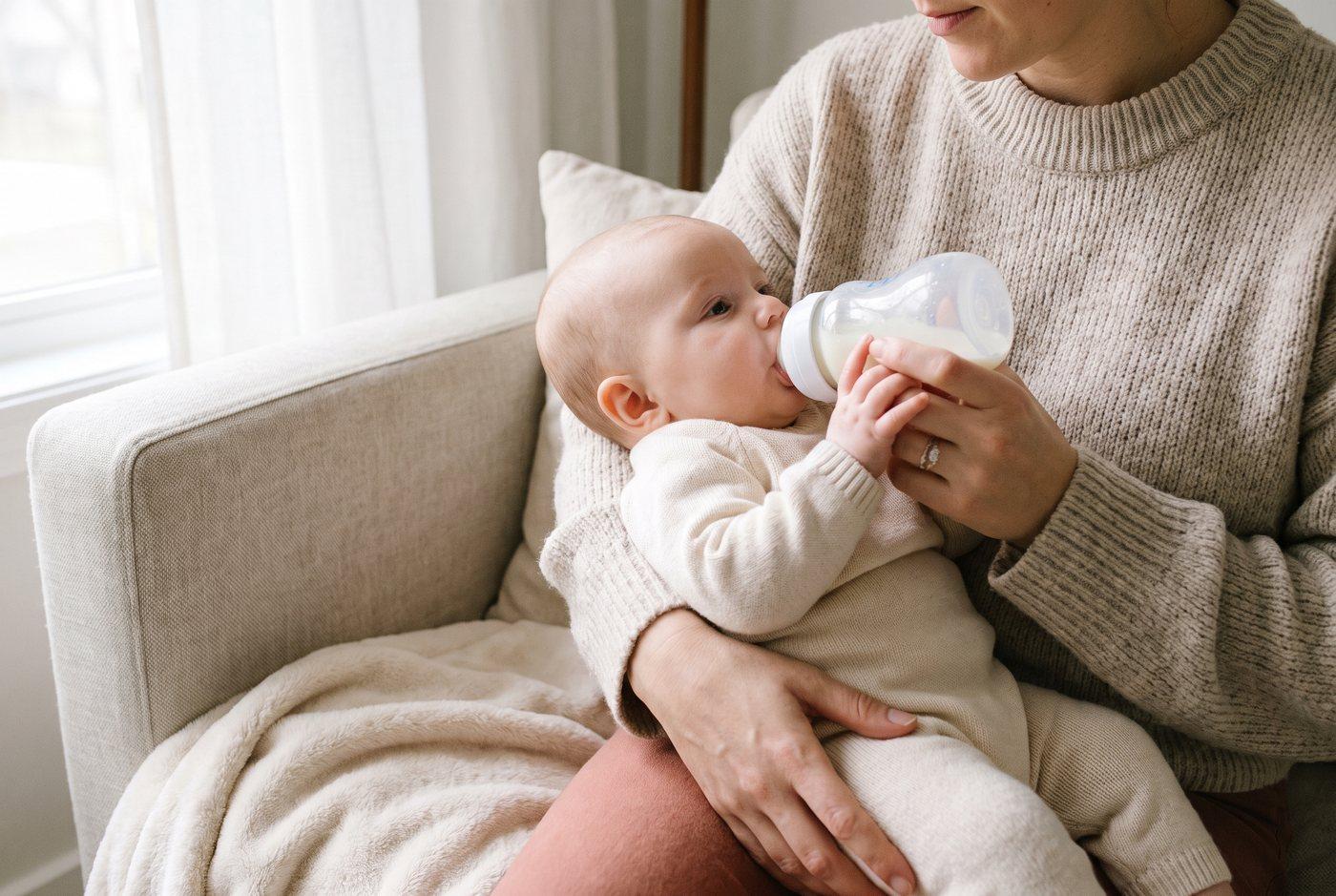
The Pickup Report You Were Dreading
You get to daycare at 5:00, and the teacher hands you the same full bottles you packed that morning. "She just wouldn't take it," they say kindly. Then your baby nurses all evening, and again at 1 a.m., 3 a.m., and 5 a.m.
If your breastfed baby refuses the bottle at daycare, or with a sitter, grandparent, or partner, you're in very common company. Most babies who refuse a bottle are healthy and simply prefer the breast, the person, and the familiar way milk arrives there. The fix is usually small changes to who offers the bottle, when, and how, not a cabinet full of new bottles.
At Latched Beginnings in Austin, Dr. Kacie Culotta works with families at the point where feeding plans meet real life: work schedules, caregivers, and tired nights. Most bottle refusal turns out to be about comfort and habit, not anything structural. Here's what we walk families through, step by step.
Why Do Breastfed Babies Refuse the Bottle?
At the breast, your baby controls the pace. Milk flows when they suck, slows when they pause, and comes with your smell, warmth, and voice. A bottle can feel fast, firm, and unfamiliar. Many babies get choosier around 3 to 4 months.
My Baby Takes Nothing All Day and Nurses All Night. Is That Okay?
This pattern is called reverse cycling, and for many babies it's a reasonable way to cope. They sip a little or nothing while you're apart, then make up the volume by nursing more in the evening and overnight.
It's okay as long as your baby is still getting enough over 24 hours. That means steady weight gain at checkups, at least about 6 wet diapers a day, regular stools for their age, and an alert, content baby. It is exhausting for you, though, so plan for safe sleep during those extra night feeds.
How Much Milk Should I Send to Daycare?
A common lactation guideline for breastfed babies between about 1 month and 6 months is roughly 1 to 1.5 ounces for each hour you're apart. For a 9-hour day, that's about 9 to 13 ounces total. Breastfed babies' intake stays fairly steady through these months instead of climbing like formula charts.
Send milk in smaller portions, such as 2 to 4 ounces per bottle, plus a 1 to 2 ounce "top off" bottle. Less milk gets wasted, and nobody pressures your baby to finish a big bottle.
What to Try Before You Buy Another Bottle
Families often tell us they've already tried several bottles. Brand switching works best after these basics are in place. Change one thing at a time for a few days.
Let someone else offer it, ideally without you nearby
Babies know where the breast is. Have your partner, a grandparent, or the daycare teacher offer the bottle while you're out of the room, or even out of the house.
Aim for not too hungry, not too full
A frantic baby has no patience to learn, and a full baby has no reason to. Try about 60 to 90 minutes after a nursing session, or as your baby is just starting to show early hunger cues like rooting or hand sucking. Some accept it best when drowsy.
Use paced feeding with a slow-flow nipple
Hold your baby fairly upright, keep the bottle closer to horizontal, and let them draw the nipple in rather than pushing it in. Tip the bottle down every few sucks so they can pause, just like at the breast. A full feed should take roughly 10 to 20 minutes.
Play with temperature and position
Some babies want milk at body temperature, while others prefer it room temperature or even cool. Try facing your baby outward or gently swaying while feeding.
Check whether the milk tastes different
If fresh milk is accepted but thawed milk is refused, smell and taste a thawed sample. A soapy or metallic taste can point to high lipase, an enzyme that is normal and safe but changes the flavor during storage. Some parents scald freshly pumped milk before freezing or mix fresh and frozen milk.
Cups, Spoons, and Other Options for Older Babies
You don't have to win the bottle battle. Around 6 months, many babies happily drink from an open cup held by an adult, a small straw cup, or a soft spoon. Babies starting solids may also enjoy breast milk mixed into cereal or purees.
Working With Daycare: A Simple Written Feeding Plan
Teachers care for several babies at once, so a one-page written plan helps. Include:
- The bottle and nipple you send, and the flow level
- Your baby's early hunger cues and the times they usually eat
- A request for paced feeding, with the feed taking 10 to 20 minutes
- Temperature preference and any position that works at home
- Backup methods to try (cup, spoon, or offering when drowsy)
- How much they usually take, and to call you if they take nothing by a set time
Ask for a daily log of ounces offered and taken, plus wet diapers. For pumping schedules and the logistics of going back, our post on returning to work and bottle tips has more detail.
When Bottle Refusal Means Calling the Pediatrician
Most bottle refusal is a preference problem, not a medical one. Still, call your pediatrician promptly if your baby has fewer than about 6 wet diapers in 24 hours, a dry mouth, a sunken soft spot, unusual sleepiness, a fever, trouble breathing, or poor weight gain. Refusal that comes with illness, or a sudden refusal of the breast as well, also deserves a call. If your baby is also turning away from nursing, our guide to nursing strikes and sudden refusal can help you sort it out.
When It Might Be More Than Preference
A smaller group of babies refuse the bottle because it is genuinely hard for them. Watch for milk leaking out the corners of the mouth on every nipple you try, clicking, trouble keeping a seal, gulping air, or long, tiring feeds at the breast too. If you see these signs, a feeding evaluation can look at how your baby's tongue, lips, and jaw are working together.
A tongue-tie is one possibility, but it's not the likely cause for most bottle refusers. When a restriction does play a role, our post on choosing a bottle for a tongue-tied baby covers the features that matter.
How Latched Beginnings Helps With Bottle Refusal in Austin
Being apart from your baby is hard enough without worrying whether they're eating. If your baby still refuses after the basics, you deserve a clear answer instead of guesswork.
Dr. Kacie Culotta, DMD, is the only dentist in Austin who holds both a laser certification for tongue-tie releases and a lactation counselor certification. At a 1-on-1 feeding consultation, she watches your baby feed, checks oral function rather than appearance alone, and talks through your daycare plan with you. Many families never need a procedure. When other support makes more sense, our all-mom team coordinates with IBCLCs, pediatricians, bodyworkers, and feeding therapists. Trust your instincts. We're here to guide you every step of the way.
Frequently Asked Questions
Will my breastfed baby eventually take the bottle at daycare if I keep sending it?
Many babies do start taking some milk from daycare caregivers within one to two weeks of a consistent routine. Babies often adapt faster with a teacher than at home with you, because the breast isn't an option there. Keep offers calm and never force the nipple in.
Should I stop nursing so my baby will take a bottle?
No, you don't need to cut back nursing to get a breastfed baby to accept the bottle. Withholding the breast mostly raises stress; focus on who offers the bottle and when.
Is it safe for my baby to go 8 or 9 hours without milk at daycare?
For a healthy baby past the newborn weeks who is gaining well and makes about 6 or more wet diapers a day, a long stretch with little milk is often tolerated through reverse cycling. Younger babies, preemies, or babies with slow weight gain need closer guidance, so check with your pediatrician.
What bottle is best for a breastfed baby who refuses the bottle?
No single bottle works for every baby, but a slow-flow nipple with a gradual slope that lets your baby open wide is a reasonable start. Change the nipple, not just the brand, and give each option several calm tries over 3 to 5 days before deciding.
Can a sitter or my partner use an open cup instead of a bottle?
Yes, many babies around 6 months and older drink well from a small open cup held by an adult. Offer small sips with your baby upright and let them set the pace.
Why does my baby take fresh milk but refuse frozen milk?
Thawed milk can taste soapy or sour when it has high lipase activity, which is safe but off-putting to some babies. Try a test bag frozen for just a few days, or mix fresh and thawed milk.
Where can I get help with bottle refusal in Austin?
Latched Beginnings offers 1-on-1 feeding and oral function consultations at 1701 Simond Ave, Suite 107A, in the Mueller area of Austin. We see families from Austin, East and North Austin, Round Rock, Cedar Park, Pflugerville, Leander, and Georgetown. Call (512) 814-7480 to schedule.
Call to Action
If your breastfed baby refuses the bottle and the daycare days are wearing you down, you don't have to solve it alone. Schedule a 1-on-1 consultation with Dr. Culotta, and we'll build a plan that works for your baby, your caregivers, and you. When your baby thrives, you do too.